Thursday, 17 December 2009

The Calm


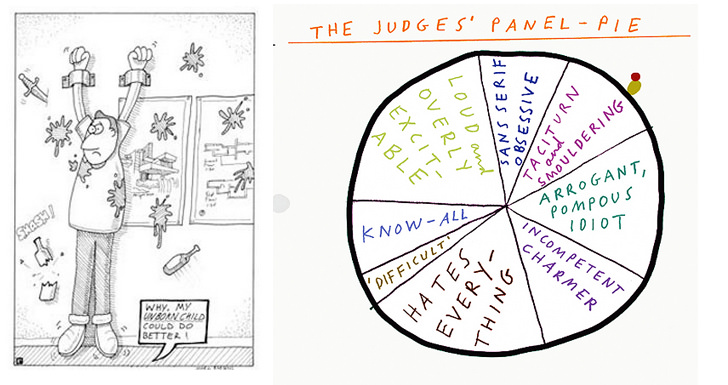
Our crit to summarise an intense first semester, presented a positive array of projects and personalities. Forthcoming holidays seem a slightly distant thought as of yet, due to the immense amount (not exaggerated by any means) of work we have left. Either way, I'm glad the crit is out of the way and a little pressure has been released and that we can steadily work towards the start of the next term without the worry of a hernia. That can wait till the week before we get back.

Time management and focus are things that have really lacked through the year so far, which is essential for any work, especially any kind of design work.

I apologise for the inconsistency of posts, content wise and time wise on this blog, as I'm still trying to figure out what this blog exactly is. Either way, thanks for visiting and merry festivities!

I have been awake for over 36 hours now so I think it's time to rest and recharge...take care all

Sunday, 13 December 2009

FINAL CRIT WEEK!!


This week is the most crucial week for this first semester, so I PROBABLY won't be posting anything this week.

Just to let all you desperate fans out there know that I'll be back!
...As soon as I get through this week...

Wish me luck, And see you all soon!

Thursday, 10 December 2009

Atelier 4 Say Hi!

In architecture school, students are usually divided in to studio groups, or ateliers.

The current Atelier Method is a form of fine art instruction often modeled after the private art studio schools of 15th to 19th century Europe. Atelier consists of an artist, in this case an architect (hopefully), working with a small number of students (us)to train them in whatever art (architecture).

Although the methods vary, most Ateliers train students in the skills and techniques associated with creating some form of representational art or architecture.

Each studio creates a unique character and style within their work, influenced by the tutors and students within it and creates the core and base within the architecture course, as a lot of the inspiration and dialogue stems from meetings and discussion through studio meetings.

I will be presenting some work we have been doing soon, to show you a little taster of what studio 4 is about. But for today, I'll leave you with this short post and a hello from studio 4.

Wednesday, 9 December 2009

How well do you really know London?

When we observe cities we see the life within it, its character and occurrences. Life or lack of it, is projected through the nature and the architecture within it. Architecture contributes to the city not just through the quality and quantity of buildings but by the spaces they create, the way they dictate the fashion in which people live and move. Every architectural city is unique in their own right in terms of density, character, and quality and London is certainly one of the best examples for this.

It was once reasonable to say that London was the greatest city on Earth, and although it still retains its status as an immense city of history and wealth, it no longer ranks as the world’s largest metropolis, and does not have the transparent beauty of other such cities as Rome or Paris. London’s beauty is more subtle (and acquired perhaps?) and one must look further to find the attraction which comes from the great richness of culture within its boundaries engrained in every street and its vistas over looking the hum of the city bursting with life.


Here is a city of vast prosperity and extensive history stemming back over two thousand years. Nobody would have ever expected the expansion, change, and tragedies that the City would have to face leading up to present London. The product is a architectural capital with a perpetually changing style of city landscape. Understanding our history is certainly not a straightforward task, but as we observe and seek to understand our heritage within the city we can start to find the remains of the different phases London has endured, thus creating an understanding of our city however lacking. The architectural relics of the Roman or the Medieval period example can be found within the oldest parts of the city albeit hard to come-by and when found one realises that it no longer has any effect to the character of the streetscape but remain as tourist attractions surrounded by new development.


In fact a lot of the city in London only really dates three centuries back, due to much rebuilding after numerous conflagrations and notably the Great Fire of London in 1666. Not to mention old buildings and sites that have simply been cleared away for new development. There are too many reasons to list for the destruction of old buildings and the redevelopment of the newer London.

With the emergence of modern architecture and high rise buildings, one could argue that London architecture is being destroyed gradually, certainly London's skyline is changing rapidly and the London we know now could be completely un-recognisable within a few decades. How aware are we of the architecture that we live, work and move through? Have you noticed the sheer diversity and quirky beauty of the London in which we live? And how do you envision our future city to look like?


^Depiction of erected buildings which are currently in production.

Monday, 7 December 2009

Feeling the heat?

With all the speculation of whether the earth's climatic progression is a natural process of the Earth's cycle, or whether our recent consumption of resources is the main contributing factor, it's hard to know who to believe and trust.

One hazy area of all this surrounds the controversy of the climate change policy. To what extent is it necessary and how much of it is really just for capital exploitation?

One thing is certain, our climate is certainly evolving, and we need to change the way we live our lives and understand the extent to how much we exploit the Earth's resources.

Certainly, one topic that is engulfing the architecture industry currently is 'carbon-neautrality'. It's constructed around the idea that we have to as a nation create architecture that dosen't create any excess carbon from the production and maintenance of buildings.

Quite a menacing task. Que 'MASDAR Project'!

Here is one such example, of revolutionary architectural practice that is currently taking place in the Abu Dhabi, UAE.


Masdar is a project in Abu Dhabi, in the United Arab Emirates. Its core is a planned city, designed by the British architectural firm Foster + Partners, the city will rely entirely on solar energy and other renewable energy sources, with a sustainable, zero-carbon, zero-waste ecology. The city is being constructed 17 kilometres (11 mi) east-south-east of the city of Abu Dhabi, beside Abu Dhabi International Airport.

Masdar will employ a variety of renewable power sources. Among the first construction projects will be a 40 to 60 megawatt solar power plant, which will later be followed by a larger facility totalling 130 megawatts. With additions of energy sources using geothermal and wind farm technology.

The City is modelled to ensure that no cars can enter and relies on a modular grid system which ensures that residents only have to walk or cycle 200 metres to an electrical transport system which takes them to any part of the city.

The city will also attempt to reduce waste to zero. Biological waste will be used to create nutrient-rich soil and fertiliser, and some may also be utilised through waste incineration as an additional power source. Industrial waste, such as plastics and metals, will be recycled or re-purposed for other uses.

The project still relies heavily on carbon-offset methodologies but politics and cynicism aside, it is surely a step in the right direction. This is only a tiny insight in to the potential of this project and of future buildings and cities. And hopefully projects like this, can spearhead future developments in cities such as London as well.

Sunday, 6 December 2009

Eblog Birth!

Follow me through my life as a hermit in architecture school.
Hopefully I can provide fascinating insight in to the life of an insignificant student on his way through it all.